Vitamin C has evolved from a simple immune-support nutrient into one of the most talked-about ingredients in modern skincare — and honestly, for good reason. After years of working hands-on with skin in a clinical setting, it remains one of the few ingredients I consistently recommend to almost every client, regardless of age or skin type.
From dermatologist-approved serums to advanced supplements, Vitamin C now sits right at the intersection of wellness, longevity, and beauty.
But what makes it so powerful — and why are skincare experts increasingly calling it a non-negotiable step for radiant skin?
Let’s explore the benefits of Vitamin C for both skin and health, whether liposomal Vitamin C really offers advantages, and why well-formulated products such as CBrighten serum are delivering such consistent results.
What Is Vitamin C and Why Does the Body Need It?
Vitamin C is essential for both skin health and overall wellbeing because it supports collagen production, protects against free radical damage, brightens skin tone, and strengthens the immune system. In simple terms, it helps your body repair, protect, and glow — all at the same time.
There’s just one small inconvenience: the human body cannot produce Vitamin C on its own. So, unlike collagen in our twenties (remember those days?) it means regular intake through diet, supplementation, or both is necessary for optimal health.
Key health benefits of Vitamin C include:
- Supporting immune system function
- Promoting collagen production
- Protecting cells from oxidative stress
- Improving iron absorption
- Supporting wound healing and tissue repair
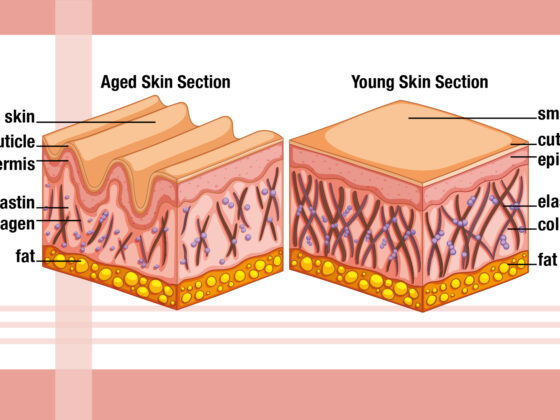
Collagen production is particularly important because collagen is the structural protein responsible for skin firmness, elasticity, and resilience. Without sufficient Vitamin C, collagen synthesis slows — which affects not only skin appearance but also joints, blood vessels, and connective tissue.
In clinic, this is often where we see the first subtle signs of deficiency: skin looking tired rather than simply “older.”
Why Vitamin C Is One of the Best Skincare Ingredients
In skincare, Vitamin C is widely considered one of the most effective antioxidant ingredients for glowing skin — and unlike many trends, this one has decades of research behind it.
Topical Vitamin C works directly within the skin to combat environmental damage caused by pollution, UV exposure, stress, and modern city living (which, let’s face it, our skin didn’t exactly evolve for).
Vitamin C skincare benefits include:
✔ Brighter, more radiant complexion
✔ Reduced appearance of pigmentation and dark spots
✔ Support for collagen production and skin firmness
✔ Protection against free radical damage
✔ Improved overall skin tone and texture
One of the reasons professionals favour Vitamin C is that it improves skin function over time rather than creating temporary surface changes. Patients often notice their skin simply looks healthier — clearer, calmer, and more luminous — which is ultimately the goal of good skincare.
Liposomal Vitamin C: Is It Better Than Regular Vitamin C?
Liposomal Vitamin C supplementation has gained significant attention in recent years, particularly within longevity and skin-health circles.
Traditional Vitamin C supplements are water-soluble, meaning some of the nutrient is broken down during digestion before absorption occurs.
Liposomal Vitamin C uses microscopic lipid (fat-based) capsules called liposomes, designed to protect the nutrient as it passes through the digestive system and improve delivery into the bloodstream.
Potential benefits include:
- Higher absorption and bioavailability
- Improved cellular delivery
- Reduced digestive irritation compared to high-dose tablets
- More consistent antioxidant support
From a skin-health perspective, improved absorption may help support collagen production and antioxidant protection internally — complementing topical skincare rather than replacing it. As with most things in skincare, results tend to be best when internal and external approaches work together.
Why Vitamin C Serum Formulation Matters.
One of the most common misconceptions I see is the assumption that all Vitamin C serums work the same way. In reality, formulation is everything.
Vitamin C is naturally unstable and can degrade when exposed to air, light, or incorrect pH levels. When this happens, effectiveness drops significantly… (and yes — that orange-brown colour change is usually your clue)…which explains why some products fail to deliver visible improvement.
The most effective Vitamin C serums typically include:
- Stabilised forms of Vitamin C
- Supporting antioxidants such as Vitamin E or ferulic acid
- Skin-barrier supportive ingredients
- Carefully controlled pH for optimal absorption
Well-balanced formulations maximise brightness while minimising irritation — particularly important for sensitive or compromised skin.
Why Cbrighten PureBright C Serum Works So Well.
Professional-grade formulations are increasingly popular because they focus on ingredient synergy rather than relying on a single “hero” ingredient — an approach I strongly believe in when developing skincare designed for real-world skin concerns.
Cbrighten PureBright C serum was formulated by our team to address dullness, pigmentation, and environmental stress simultaneously, reflecting how skin actually behaves in everyday life rather than under laboratory conditions. Drawing on years of clinical experience treating a wide range of skin types, it was designed to deliver visible brightness while maintaining skin balance and comfort — because effective skincare should improve skin health, not challenge it.
The goal was to create a Vitamin C serum that patients could use consistently without the sensitivity issues often associated with stronger formulations — because consistency, rather than intensity, is what ultimately delivers lasting skin results.
In practice, this means improvements appear gradually but consistently — skin looks clearer, brighter, and healthier rather than artificially “treated.” This kind of steady, natural-looking improvement is often what patients value most, because results feel authentic, wearable, and sustainable over time.
Vitamin C for Skin: Why Inside and Outside Both Matter.
One of the biggest shifts in modern beauty is recognising that skincare works best when supported internally.
- Dietary Vitamin C helps build collagen and protect cells from within.
- Liposomal supplementation may enhance nutrient absorption.
- Topical Vitamin C serums defend skin directly against environmental damage.
Together, they create a comprehensive strategy for maintaining youthful, radiant skin.
This “inside-out beauty” philosophy reflects a growing move toward preventative skincare — because increasingly, people want skin that looks healthy, not just temporarily perfected.
Best Food Sources of Vitamin C?
For natural Vitamin C intake, include citrus fruits (oranges, lemons, grapefruit), strawberries and berries, kiwi fruit, red and yellow bell peppers, broccoli, leafy greens, and tomatoes.
Interestingly, bell peppers often contain more Vitamin C per serving than oranges — proof that sometimes the skincare heroes are hiding in your salad rather than your supplement cabinet.
Final Thoughts: Why Vitamin C Remains a Beauty Essential.
Few ingredients offer the versatility of Vitamin C. It supports immunity, strengthens collagen production, protects against environmental stress, and visibly improves skin brightness — making it one of the most researched and trusted ingredients in both nutrition and skincare.
Whether through diet, liposomal supplementation, or advanced topical formulations like CBrighten serum, Vitamin C continues to prove that true radiance starts at the cellular level.
Because glowing skin isn’t just about what you apply — it’s about how you support your skin from every angle. And sometimes, the most effective skincare advice really is the simplest: consistency beats complexity every time.